
What Your Call Data Is Trying to Tell You and Why It Matters

Key Takeaways
- Call data shows customer needs, efficiency gaps, sales potential, and team performance.
- Eight metrics matter most, from call volume and handle time to sentiment and DID usage.
- Ignoring call data leads to missed opportunities, higher churn, and wasted cost.
- Axion brings real time dashboards, custom reports, and AI Analysis together in one platform.
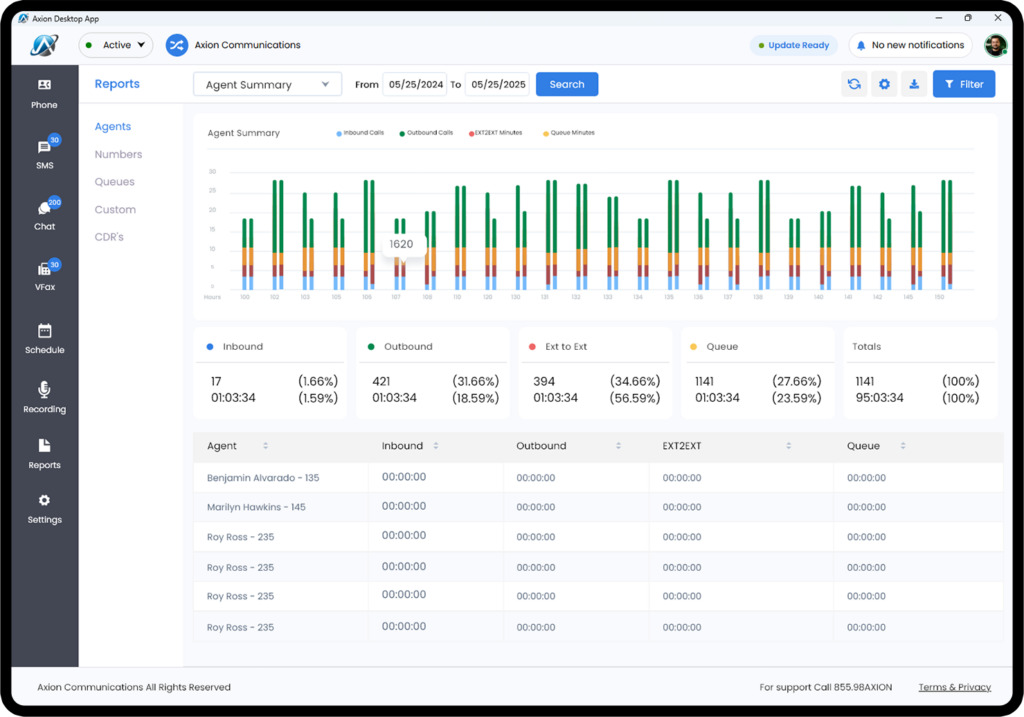
What if every phone call could help your business grow? From customer frustrations to operational inefficiencies and untapped sales opportunities, your call data reveals far more than a simple log of conversations. Yet many companies overlook this resource, treating call records as routine rather than as strategic assets.
With 80% of customer interactions still involving voice communication (Forrester, 2024), overlooking call data means missing critical insights. A McKinsey study shows that businesses using call analytics improve operational efficiency by 10 to 20% and customer satisfaction by 15 to 30%.
This blog explores how call data reports can turn numbers into strategies that drive growth, so you can see what your calls are revealing and why it’s time to pay attention.
What Your Call Data Can Reveal
Every time a customer calls with a question or complaint, they leave clues about what’s working and what needs improvement. A restaurant chain might notice a spike in calls about delivery delays, while a tech support line sees repeat callers struggling with the same issue. Analytics reports dive into metrics like call volume, wait times, and customer sentiment, uncovering insights that can transform your approach. These insights help you save time, keep customers happy, and grow revenue.
Here’s what call data can show you:
- Customer needs: frequent calls about a specific product or service often point to unclear instructions or gaps in your customer journey. Analyzing call recordings and transcripts shows you the common questions and pain points, so you can update resources and improve the customer experience.
- Efficiency gaps: high call abandonment rates, often caused by long wait times or understaffing, signal operational problems. In healthcare, an average abandonment rate of nearly 7% can mean thousands of missed opportunities and significant lost revenue. Watching these metrics helps you adjust staffing and call routing.
- Sales potential: call analytics can link inbound calls to specific marketing campaigns, revealing which ads or channels drive the most valuable leads. That attribution lets you put your marketing spend where it works, leading to higher conversion rates and better ROI.
- Team performance: metrics like first call resolution (FCR) and average handle time are crucial for evaluating agent effectiveness. Improving FCR boosts customer satisfaction and loyalty while reducing repeat calls and costs. In fact, 80% of service professionals now track FCR.
These insights give you the tools to fix problems, seize opportunities, and make every call a step toward growth. With strong analytics, your call data becomes a strategic asset that helps you deliver better service, run leaner operations, and drive measurable results.
8 Must Have Call Data Metrics for Smarter Decisions
Your call data is only as powerful as the metrics you track. These eight metrics pinpoint exactly where your business can improve and grow, from streamlining operations to building customer loyalty.
1. Call Volume and Timing
Knowing when calls peak ensures you’re staffed for busy moments. According to Harvard Business Review, up to 30% of customers hang up after one minute on hold (2024). Volume and timing reports in Axion’s real time analytics dashboard help you plan for demand spikes and avoid missed opportunities.
2. Average Handle Time (AHT)
Are calls quick or dragging? Calls under 30 seconds might mean drop offs, while calls over 5 minutes could signal inefficiencies. Top call centers target 3 to 4 minutes (Call Centre Helper, 2024). Axion’s analytics let you monitor and hit that balance.
3. First Call Resolution (FCR)
Solving issues on the first call builds loyalty. Industry research shows that every 1% increase in FCR can lift satisfaction by up to 1% (SQM Group). Axion tracks FCR so you can spot training needs and improve outcomes.
4. Call Abandonment Rate
When more than 5% of callers hang up before reaching an agent, it signals staffing or process issues that need attention. Industry standards recommend keeping abandonment between 2% and 5%, with healthcare aiming for under 3%. Axion’s Queue Reports provide real time abandonment stats so you can adjust staffing and add callbacks or better routing.
5. Customer Sentiment
AI sentiment analysis, like Axion’s AI Analysis, detects caller emotions. Research shows angry callers carry a 20% higher churn risk, while excited callers are 30% more likely to buy (Gartner). These insights help you address concerns before they escalate and spot sales opportunities.
6. Queue Performance
Long waits frustrate callers and increase abandonment. Axion’s Queue Reports track wait times, abandonment, and queue position, helping you staff correctly and keep customers satisfied.
7. Automated Report Delivery
Scheduled reports deliver key metrics straight to your inbox or dashboard. Businesses with automated analytics make decisions up to 15% faster (Gartner, 2025), and you always have the latest numbers without manual effort.
8. DID (Direct Inward Dialing) Summary
Track inbound call stats for each DID number to see which lines, departments, or campaigns get the most attention. If your sales line receives double the calls of your support line, you can allocate resources accordingly. Axion’s DID Summary reports reveal these usage trends.
When choosing a call analytics tool, make sure it covers all eight. Axion delivers them in one platform, with custom reports, visual dashboards, and AI analytics.
Your calls are talking. Start listening.
See how Axion's call analytics and AI Analysis turn every conversation into a decision you can act on.
5 Strategies to Unlock Your Call Data
Call data is a secret weapon, but only if you use it. These five strategies turn insights into action:
- Set clear objectives for call analytics. Decide what you want to achieve, whether that’s higher customer satisfaction, shorter wait times, or more sales conversions. Clear goals keep your analytics focused on measurable outcomes.
- Integrate call analytics with your CRM and other platforms. Connecting call data to your CRM and marketing tools gives you one view of each customer journey, supports personalized service, and shows the full impact of every interaction.
- Use AI insights for real time action. Sentiment analysis, keyword detection, and real time alerts flag customer frustration or opportunity as it happens, so your team can step in and resolve issues on the spot.
- Monitor and improve key metrics continuously. Review call volume, abandonment rate, first call resolution, and agent performance regularly. Dashboards and scheduled reports help you spot trends and adjust staffing or training early.
- Segment and personalize based on call insights. Group customers by behavior, needs, or sentiment, then tailor campaigns, support resources, and follow ups to each group.
Put these strategies to work and raw call data becomes real business value: better customer experiences, smoother operations, and smarter growth.
The Cost of Ignoring Your Call Data
Ignoring call data is like turning customers away at the door. Without analytics, you can’t see inefficiencies, customer pain points, or lost revenue.
1. Missed Opportunities Add Up
Overlooking call data means missing real chances to grow. Research shows companies using customer analytics can increase loyalty and retention by up to 58%, while those who ignore analytics often stall.
2. Higher Risk of Customer Churn
Customers expect fast, personalized service. Zendesk research shows that companies failing to catch negative sentiment risk higher churn, and 76% of consumers will stop doing business with a company after just one bad experience.
3. Inefficiency That Hurts the Bottom Line
Businesses that use analytics report an average 8% increase in revenue and a 10% reduction in costs (McKinsey, 2024). Without insight into reports like DID usage, you risk overstaffing, missed sales, and operations that eat into profit.
How to Turn Every Call into a Competitive Edge with Axion
Axion’s platform brings the eight essential metrics together with features built to improve operations, customer loyalty, and ROI:
- Comprehensive metrics: call volume, timing, handle time, abandonment, queue performance, sentiment, and DID usage in one real time view.
- Custom reports: build and schedule reports around the metrics that matter most, then filter, export, and automate them for any team.
- AI Analysis: sentiment analysis, call summaries, keyword detection, and predictive insights help you spot frustration, sales opportunities, or compliance risks and act fast.
- Secure and compliant: PII redaction and data privacy controls make Axion a fit for healthcare, finance, and other regulated industries.
- Easy dashboards: cloud dashboards make trends and performance easy to understand, with no technical expertise required.
With Axion, raw call data becomes business intelligence you can act on.
Conclusion
Your call data isn’t just numbers. It’s the voice of your customers, revealing their needs, your inefficiencies, and your sales opportunities. Ignoring it risks churn, lost profit, and missed chances. By tracking the right metrics, putting the strategies above to work, and choosing a complete solution like Axion, you turn every customer interaction into an advantage.
Frequently Asked Questions
What is call data analytics and why does it matter?
Call data analytics is the process of collecting and interpreting data from phone calls to uncover trends, customer needs, and operational inefficiencies. It helps businesses improve service, staff correctly, and make data driven decisions.
Which call metrics should every business track?
Call volume, average handle time, first call resolution, abandonment rate, customer sentiment, queue performance, automated report delivery, and DID usage.
How can AI call analytics improve customer experience?
Sentiment analysis and keyword detection identify frustration or satisfaction, so businesses can respond quickly, resolve issues faster, and personalize interactions.
What are the benefits of integrating call analytics with a CRM?
You get one view of the customer journey, making it easier to track interactions, personalize service, and measure the impact of marketing campaigns.
How do scheduled call reports save time?
They deliver key insights to your inbox or dashboard automatically, so you always have current information without pulling reports by hand.
Is call data analytics secure and compliant?
Platforms like Axion include PII redaction and data privacy controls that support compliance with regulations like HIPAA.
How can call analytics improve marketing ROI?
Tracking call sources, campaign attribution, and sentiment shows which marketing efforts drive the most valuable leads, so you can put budget where it performs.